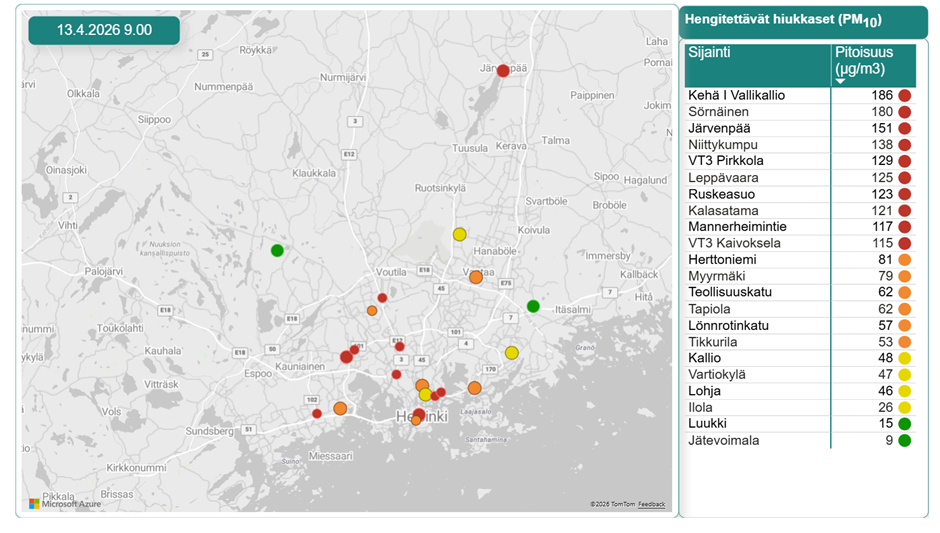
Street dust widely deteriorates air quality now in the Helsinki metropolitan area
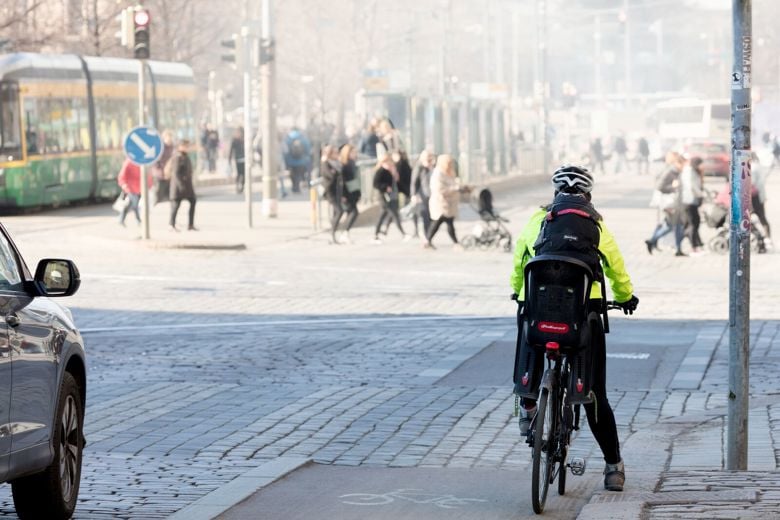
There is currently a lot of street dust in the air, and air quality is poor in many places, HSY’s measurements show. The dustiest areas are those with heavy traffic. When spending time outdoors, it is advisable to choose a route that, when possible, keeps farther away from busy streets. Even one block away from a busy street, the air is cleaner.
A lot of street dust in the air
The spring street dust season is under way in the Helsinki metropolitan area. According to measurements by Helsinki Region Environmental Services HSY, there has been a lot of street dust in the air in recent days both in the metropolitan area and elsewhere in Uusimaa. High concentrations of street dust occur especially along busy main roads and streets.
“Air quality has today and during the weekend been poor at times due to street dust in different parts of the metropolitan area and the rest of Uusimaa. There is street dust in the air especially during rush hours in high-traffic areas. Dust concentrations have been more than ten times higher than normal in high-traffic environments,” says HSY’s Air Quality Expert Nelli Kaski.
“The weather will remain sunny, so there will likely be plenty of street dust in the air in the coming days as well,” Kaski continues.
The street dust situation in the coming days varies depending on the weather. On sunny and dry days, there is a lot of street dust in the air. Rainy or foggy weather brings temporary relief for those experiencing symptoms from street dust.
Symptoms can be alleviated by avoiding areas with busy traffic
Street dust is a significant health hazard in cities. Anyone can experience irritation symptoms such as a runny nose, coughing, and itching of the eyes and throat. Street dust is particularly harmful to people with respiratory and heart diseases, older people, and small children.
Kaski advises how you can reduce symptoms caused by street dust when outdoors:
“The best way to reduce symptoms is to avoid moving around in dusty areas. When walking or cycling outdoors, it’s worth trying to choose a route farther away from a busy street. Even one block away from a busy street, the air is cleaner.”
Less street dust with friction tyres
Many people do not realize that it is possible to influence street dust already during winter. One way to reduce street dust is to choose friction tyres for winter.
“Friction tyres wear down asphalt less than studded tyres, which means less street dust and better air quality in spring. However, the best choice for reducing street dust is to favour public transport, walking and cycling,” Kaski says.
Street dust consists mainly of finely ground asphalt and traction sand. Studded tyres in particular wear down asphalt and therefore generate street dust.
Winter weather conditions affect how much street dust is formed. Spring weather, in turn, affects how street dust rises into the air we breathe.
“The amount of street dust decreases during spring as streets are cleaned and all studded tyres have been changed to summer tyres,” Kaski says.
Cities are currently carrying out spring street cleaning. To speed up cleaning, it is especially important to follow vehicle relocation notices (move-your-car signs).
10 tips for the street dust season
Kaski gives ten tips on how you can alleviate symptoms caused by street dust and reduce the formation of street dust:
- Spend time outdoors farther away from busy streets. The air is cleaner even one block away from a busy street. A good respirator, i.e. an FFP2 mask, may help some people, but it does not suit everyone.
- Spend time in parks, forests, or by the sea. In such places, air quality is usually better. Avoid especially strenuous physical exertion in high-traffic areas.
- Consider moving indoors if you experience strong irritation symptoms.
- Avoid airing your home especially during rush hours if it is located in a high-traffic area. Make sure window and door seals are in good condition.
- Replace your home’s supply air filters in spring and autumn. High-quality supply air filters effectively reduce the amount of street dust that enters indoors.
- Avoid unnecessary driving. It stirs up street dust into the air. Prefer walking, cycling and public transport.
- Change winter tyres to summer tyres as soon as weather conditions allow.
- Remember to follow vehicle relocation notices. Street cleaning slows down considerably if incorrectly parked cars need to be moved.
- Remove traction sand when it is damp. Using a leaf blower to remove traction sand is prohibited in municipal environmental protection regulations in the Helsinki metropolitan area and in many other cities.
- Follow the air quality situation at hsy.fi/airquality.
More information:
- current air quality situation: hsy.fi/airquality.
- street dust measurement results and more information about street dust: hsy.fi/streetdust
- air quality situation in the rest of Uusimaa: Air quality Uusimaa - HSY
- Article Street dust reduces air quality - HSY
- how to ease your symptoms pdf