HSY will start invoicing for unnecessary refuse truck visits – this is how you can avoid fees
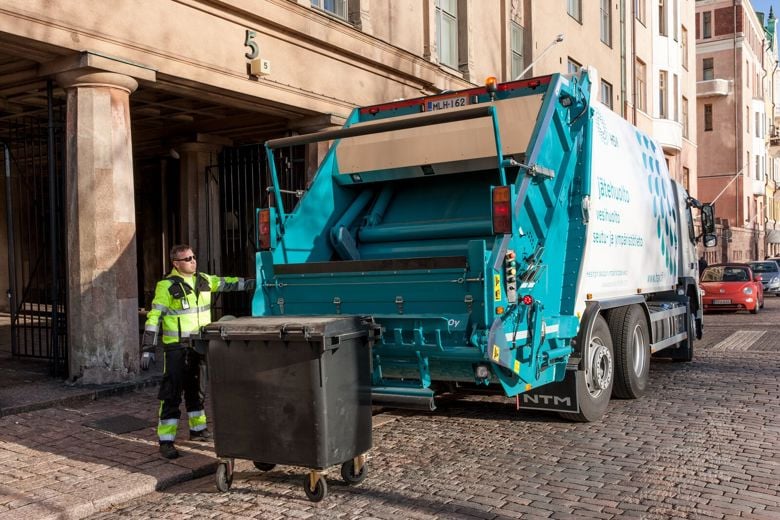
From 1 January 2027, the Helsinki Region Environmental Services HSY will start charging for unnecessary collections, i.e. refuse truck visits without collection. The fee will be charged if the property’s only waste container for an individual waste type is missing, empty or contains incorrect waste.
A refuse truck sometimes visits a property unnecessarily because the waste container is empty, contains incorrectly sorted waste or is missing. A new fee for this will be added to the customer’s waste management invoice, which will be marked with “Unnecessary collection - visit without collection”. For manually movable containers, the emptying fee for the smallest waste container according to the waste type will be charged. In the case of a waste press, crane emptying or front-loading, the unnecessary collection will be charged as a transport fee.
From the beginning of 2027, the fee for unnecessary collection will be applied to all waste collection.
"The customer will avoid fees, act in accordance with waste management regulations and keep their own waste services up to date. Until now, we have not charged customers for unnecessary visits. However, the visits take up the refuse truck driver’s working time and cause fuel costs and emissions. The fee also encourages people to sort correctly," says Juho Nuutinen, Operations Manager.
Incorrectly sorted waste is emptied as mixed waste
Different trucks visit the properties to empty containers for different waste types. The refuse trucks transport recyclable waste to companies that process it, and mixed waste to be incinerated at Vantaa Energy’s waste-to-energy plant.
However, if a biowaste container or a container for packaging waste contains a significant amount of waste other than what should be sorted there, the contents cannot be emptied into the recyclable material inside the refuse truck. If this is done, the receiving company has the right to refuse to accept the load.
"In this case, we need to order mixed waste collection for the container for recyclable waste. This requires another refuse truck to visit the property, which means that there will be a fee for unnecessary collection and for mixed waste collection," says Nuutinen.
How to avoid unnecessary collection fees
The reason for an empty container may be, for example, that the customer has forgotten to interrupt collections for the duration of a holiday trip or that a too frequent collection frequency has been ordered for the waste container. A situation where a waste container is missing is usually encountered at a holiday home.
If the property has a year-round waste service, the rhythm of waste transport can be changed free of charge or it can be interrupted for a specified period of time, for example due to a holiday trip. A notification must be submitted to HSY no later than one week before the planned start. Please also note that if the interruption is longer than a year or there are more than two consequent interruptions, an application for an exception to waste management regulations must be submitted to HSY.
"It should be noted that the interruption always applies to all waste types. For example, you cannot interrupt the collection of biowaste containers during an absence and continue with only the mixed waste service. When submitting the notification, you must specify the dates when the interruption starts and ends," says Juho Nuutinen.
Seasonal composting is the only reason why biowaste collections can be interrupted while continuing other waste services. For example, if you want to compost during the summer season weeks 14-48, you can do this and order HSY’s biowaste collection for the rest of the year.
Unnecessary collection and mixed waste fees can also be avoided by sorting waste correctly. Housing companies should communicate about unnecessary collection to their residents and encourage them to sort waste so that waste management does not incur additional costs.
"According to waste management regulations, housing companies are responsible for ensuring that there are up-to-date sorting instructions at the waste collection point. If there are no signs at the waste collection point or they are in poor condition, new signs can be ordered free of charge from HSY. On our website, you can also find the Waste Guide, which provides advice on waste sorting. Let’s recycle together," says Nuutinen.
Remember these
- Sort your waste into the correct collection containers.
- Make sure that the waste containers included in your waste service are at the emptying point when the refuse truck arrives. Also take into account the effect of public holidays on waste collection: your container may be emptied earlier or later than the normal emptying day.
- Decrease the collection frequency if not enough waste accumulates between emptyings.
- Interrupt collections if the property is unoccupied and no waste is generated.
More information
- Price lists
- Waste management regulations for the Helsinki Metropolitan Area and Kirkkonummi
- Brochure service
- Waste guide
Waste management terms explained
Unnecessary collection: A situation in which a refuse truck visits the property unnecessarily because the waste container is missing, empty or contains incorrect waste.
Biowaste: Food waste generated in the preparation or serving of food, such as the peels of root vegetables, leftovers and inedible fruits, berries and cultivated food plants.
Packaging waste: Plastic, carton, glass and metal used to package products.
Mixed waste: Combustible waste that cannot be reused or used as material.
Waste management regulations: The waste management regulations specify the Waste Act and the Waste Decree, adapting their obligations to the operating environment of the municipality. The waste management regulations specify, among other things, the sorting, collection and transport of waste and the prevention of littering. The waste management regulations bind property owners, residents and, in part, other operators in this area. HSY acts as the municipal waste management authority and draws up waste management regulations for the Helsinki, Espoo, Kauniainen and Vantaa regions and, by agreement, for the Kirkkonummi region.