Air quality in Uusimaa was mostly good in 2025 – declining emissions from street dust and traffic
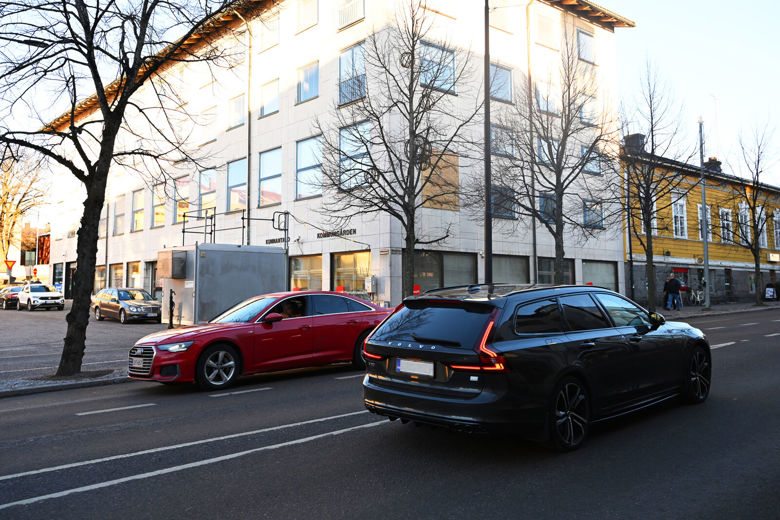
Air quality in Uusimaa outside the Helsinki Metropolitan Area was mostly good or satisfactory in 2025, according to HSY’s air quality measurements. The main factors affecting air quality were traffic exhaust emissions, street dust, and residential wood burning.
Traffic and wood burning monitored in Uusimaa
Helsinki Region Environmental Services Authority (HSY) monitors air quality in the Helsinki Metropolitan Area and elsewhere in Uusimaa. Last year, HSY measured the impacts of traffic exhaust, street dust, and wood burning.
“Air quality in Uusimaa was mostly good or satisfactory last year,” says HSY air quality expert Outi Väkevä.
Less street dust in the air than in previous years
The spring 2025 street dust season was moderate in Uusimaa. There were two exceedances of the limit value level for inhalable particles (so-called dusty days) in Lohja and four in Porvoo.
“In Porvoo, the number of dusty days in previous measurement years has been 7–23, clearly higher than in 2025, except for 2020. The measurement station in Lohja is located further from traffic, and the number of dusty days there is generally low, varying from zero to three in recent years,” says Väkevä.
In the long term, street dust concentrations have decreased both in Uusimaa and in the Helsinki Metropolitan Area.
“Weather conditions have a strong influence on street dust levels. Efforts to control street dust have also likely increased, contributing to lower concentrations,” Väkevä explains.
Fine particles measured in Porvoo for the first time
Fine particles are particularly harmful to health. Their concentrations are mainly influenced by long-range transport of air pollution, which varies in intensity from year to year. Fine particles were measured in Porvoo for the first time last year.
The annual average concentration of fine particles in Lohja was slightly higher than the previous year and at the level of the WHO annual guideline. In Porvoo, the concentration was slightly higher than in Lohja and exceeded the WHO guideline. However, long-term trends show decreasing concentrations both in Lohja and in the Helsinki Metropolitan Area.
Reduced traffic emissions have improved air quality
Nitrogen dioxide in ambient air mainly originates from traffic exhaust. Concentrations in Lohja and Porvoo did not exceed limit values, national guideline values or WHO guidelines, and were lower than in previous measurement years.
“In the long term, exhaust concentrations have decreased, especially in high-traffic areas. This is due to reduced emissions as vehicle technology has improved and the vehicle fleet has been renewed and increasingly electrified,” says Väkevä.
Wood burning increased PAH concentrations in the Kyrölä detached-house area during the heating season
Emissions from wood burning can locally significantly deteriorate air quality in residential areas with detached houses. In Järvenpää, the impact of wood burning on air quality was monitored in 2025 in the Kyrölä detached-house area. PAH compounds and the lung-deposited surface area of particles (LDSA) were measured in the air. Benzo(a)pyrene is a carcinogenic organic compound belonging to polycyclic aromatic hydrocarbons (PAHs), originating mainly from wood burning.
“In Kyrölä, the annual average concentration of benzo(a)pyrene was clearly below the EU target value and low compared to concentrations previously measured in Uusimaa. Monthly concentrations were highest during the heating season and lowest in summer,” Väkevä notes.
The annual average LDSA level in Kyrölä was approximately at the same level as concentrations previously measured elsewhere in Uusimaa. Wood burning increased LDSA levels somewhat, especially during weekend evenings when fireplaces and saunas are commonly used.
Long-term cooperation underpins air quality monitoring in Uusimaa
“In Uusimaa, air quality outside the Helsinki Metropolitan Area is monitored through a joint monitoring programme funded by municipalities and industry. Monitoring has been carried out since 2004 in accordance with five-year monitoring programmes,” says Senior Inspector Vesa Suominen from the Licensing and Supervision Agency.
Air quality monitoring in Uusimaa is coordinated by a group led by the Licensing and Supervision Agency, with representatives from municipalities in the region. HSY is responsible for practical monitoring under agreement. Measurement results are available online on the HSY webpage.
Last year, HSY measured air quality in a traffic environment in Porvoo and at an urban background station in Lohja. Concentrations of nitrogen oxides and particulate matter were monitored. Indicative nitrogen dioxide measurements were also carried out in Hyvinkää, Järvenpää, Kerava, Kirkkonummi, Lohja, Nurmijärvi, Porvoo, Tuusula and Vihti.
Information on air pollutants
- Nitrogen oxides in ambient air originate from traffic, especially diesel vehicles and heavy-duty traffic. Nitrogen dioxide causes the most health effects; at high concentrations it constricts the airways and increases respiratory symptoms, especially in children and people with asthma.
- Thoracic particles mainly consist of street dust resuspended by traffic and may harm health. Elevated levels particularly affect people with respiratory diseases.
- Fine particles are formed mainly from traffic exhaust, street dust and wood burning, and are also transported over long distances. They are considered especially harmful as they penetrate deep into the lungs. Sensitive groups include children, the elderly, and people with heart and lung diseases.
- Benzo(a)pyrene is a PAH formed during incomplete combustion. Elevated concentrations occur particularly in detached-house areas with extensive wood burning. Traffic contributes little to PAH levels. Benzo(a)pyrene and many other PAHs increase cancer risk.
- The lung-deposited surface area (LDSA) describes the surface area of particles that reach the deepest parts of the lungs. Key sources in the Helsinki region include vehicles and machinery, wood burning, and marine and air traffic. Long-range transported pollution also increases LDSA levels.
- Limit values define the highest acceptable concentrations of air pollutants based on health criteria. If exceeded, municipalities must prepare and implement air quality plans.
- WHO guideline values are recommendations that guide urban planning and decision-making.
Further information:
- Air quality in Uusimaa 2025 report (in Finnish, abstract in English)
- Current air quality in Uusimaa
- Uusimaa air quality monitoring programme 2024–2028 (in Finnish)
- Outi Väkevä, Air Quality Expert, HSY, outi.vakeva(at)hsy.fi
- Vesa Suominen, Senior Inspector, Licensing and Supervision Agency, vesa.suominen(at)lvv.fi