Burning wood correctly can significantly reduce emissions
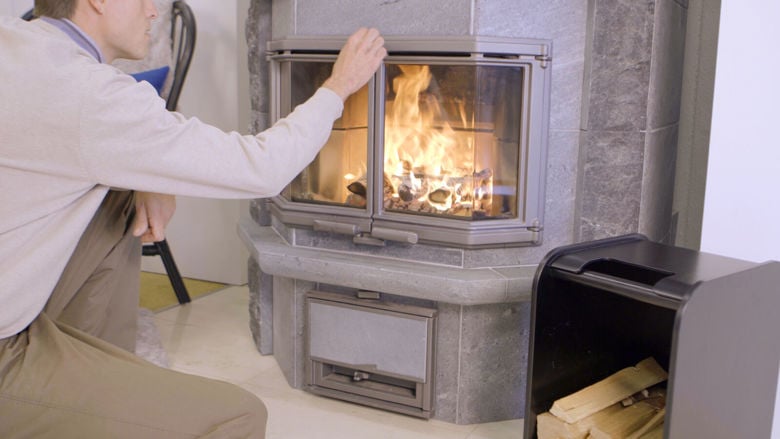
Wood burning always produces emissions, but proper burning practices generate significantly fewer emissions. This improves air quality in your home and the surrounding area. It also helps you make better use of the heat and keeps your fireplace in better condition. The most important thing is to burn only dry, clean wood.
Burning rubbish produces large amounts of harmful emissions
Wood burning produces emissions, such as fine particles and polycyclic aromatic hydrocarbons (PAHs), that impair air quality and are harmful to health. Harmful emissions are particularly high when rubbish or damp wood is burned in a fireplace. Poor burning practices produce many times more emissions than burning dry wood correctly.
“Burning rubbish, such as plastic and milk cartons, produces large amounts of emissions that are harmful to health and also damages the fireplace. Painted or treated wood must not be burned in a fireplace either,” says HSY’s Air Quality Expert Outi Väkevä.
Wood burning has the greatest impact on air quality in densely built detached-house areas, especially on cold, calm evenings. Proper burning practices generate significantly fewer emissions, help you make better use of the heat and keep your fireplace in better condition.
“An easy way to reduce emissions from wood burning is to burn only dry wood. The best place to store firewood is a well-ventilated woodshed. It keeps the wood dry,” Väkevä says.
The number of smoke complaints varies from year to year
Wood is burned in all cities in the Helsinki metropolitan area, and smoke nuisance from wood burning is reported to the cities’ environmental authorities every year. The number of complaints varies somewhat both between cities and from year to year. This year by mid-October, Espoo’s environmental supervision authorities had received 19 smoke complaints, Vantaa 17 and Helsinki 15. Smoke complaints are rare in Kauniainen.
“In Espoo, smoke complaints usually concern situations where smoke from a fireplace in a nearby detached house enters the complainant’s own home. Some complaints also concern burning rubbish or smoke from hot tubs. This year, we have received slightly more complaints than in previous years. To help address a smoke nuisance, we need the person reporting it to know the address where the smoke is coming from,” says Niko Torvela, Environmental Inspector at the City of Espoo.
“Above all, smoke nuisance can be reduced through proper wood-burning practices,” Torvela continues.
If smoke from your neighbour’s wood burning bothers you, it is advisable to discuss the matter with your neighbour first. You can order brochures, such as the Guide to wood burning, free of charge from HSY and distribute them in your neighbourhood.
“Vantaa received 14 smoke complaints last year and has received 17 this year. In earlier years, the number was closer to 30. Typically, people making smoke complaints have not discussed the matter with their neighbour before contacting the authorities,” says Saija Ruponen, Environmental Inspector at the City of Vantaa.
In Vantaa, there have been a couple of cases where smoke complaints concerned homes rented out on a temporary basis where wood had been burned.
The colour of the smoke reveals the level of emissions
The colour of the smoke coming from the chimney indicates how cleanly the wood is burning. The lighter and more colourless the smoke, the better.
“If the smoke coming from the chimney is dark or has an acrid smell, emissions are high and combustion is not particularly energy-efficient either. This may be because there is too little combustion air, or because rubbish or overly damp wood is being burned,” Väkevä says.
Väkevä offers eight tips for low-emission wood burning. Try these tips and see whether the smoke becomes colourless:
- Remove old ash.
- Burn only dry wood. Bring firewood indoors to warm up 1–2 days before use.
- Do not burn rubbish.
- Fill the firebox no more than halfway. Place larger logs at the bottom and smaller ones on top. Leave space at the sides as well.
- Light the fire from the top, unless the operating instructions state otherwise. Use wood-based kindling, such as birch bark, wood shavings, small sticks or ready-made wood-based firelighters.
- Remember to adjust the air supply. The fire should neither burn too fiercely with a roaring sound nor smoulder weakly.
- The age and type of fireplace matter. New fireplaces often have lower emissions than old ones. For example, a heat-retaining fireplace has better heating efficiency and produces fewer emissions than an open fireplace.
- Every fireplace is slightly different, so learn how to use your own correctly. Read the operating instructions and monitor the colour of the smoke.
Further information:
- Current air quality in the Helsinki metropolitan area: hsy.fi/airquality
- Tips for low-emission wood burning: hsy.fi/burnwoodcleanly
- HSY’s brochure service, brochures on wood burning: Wood Burning - HSY Esitepalvelu